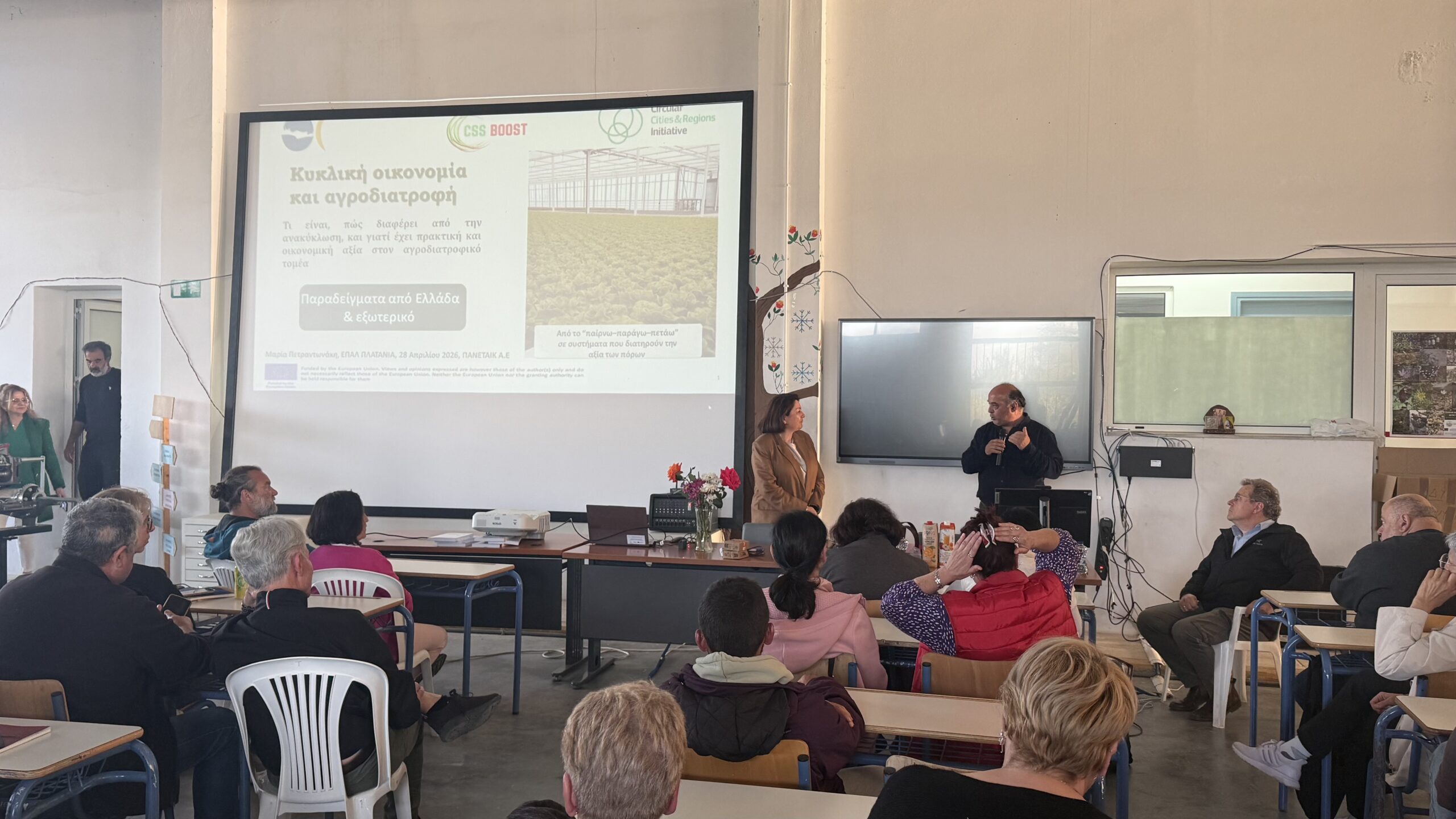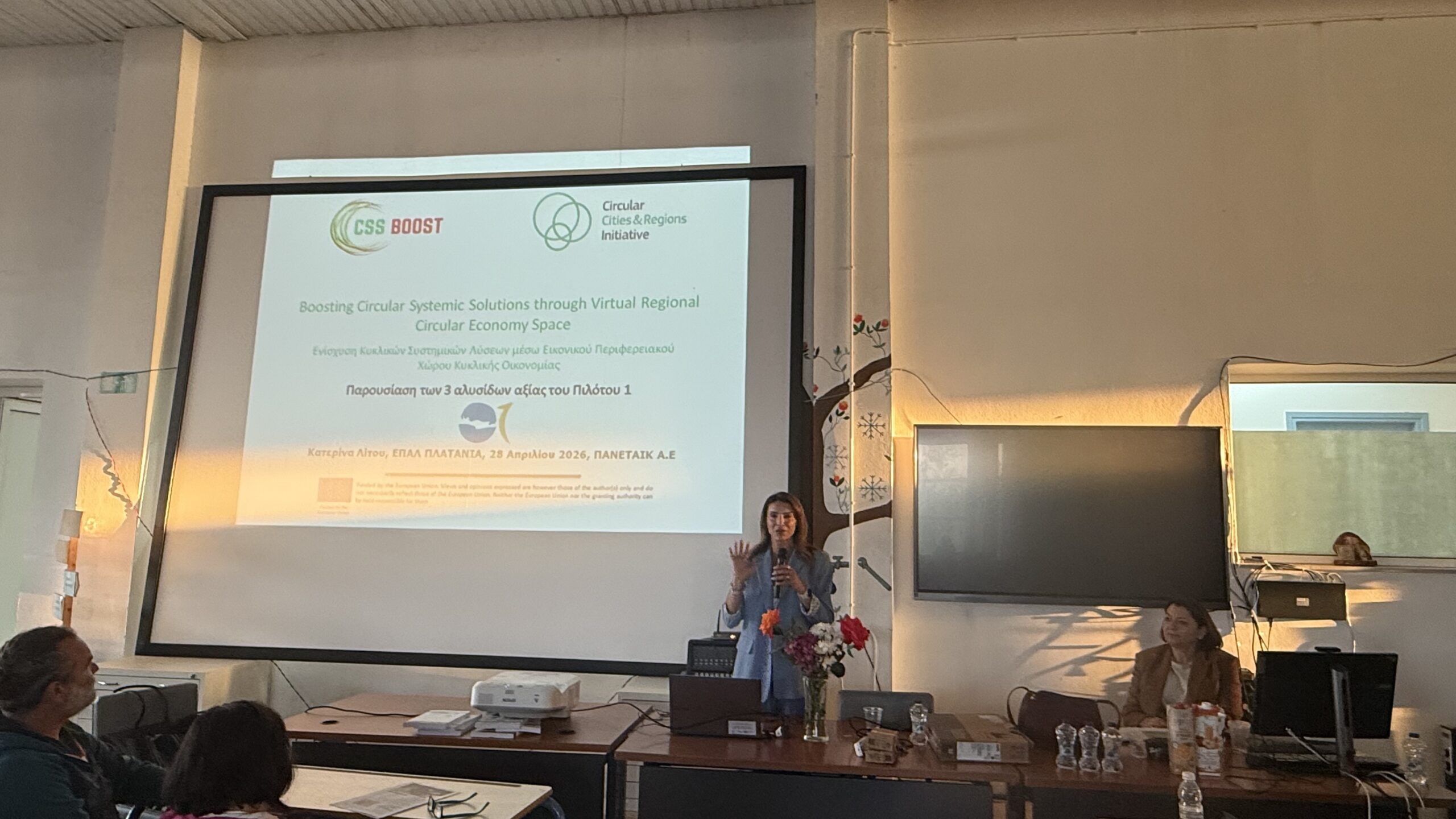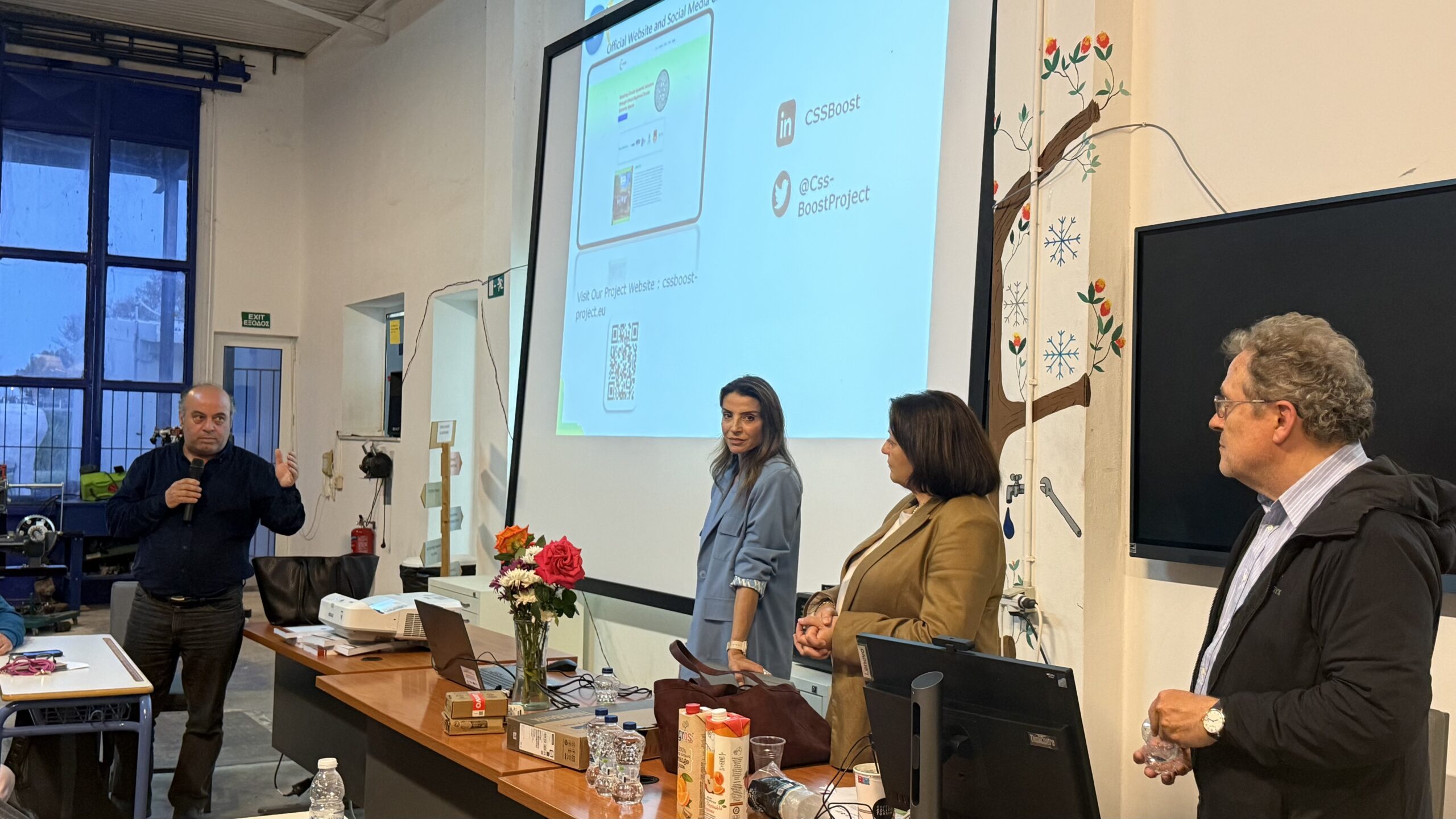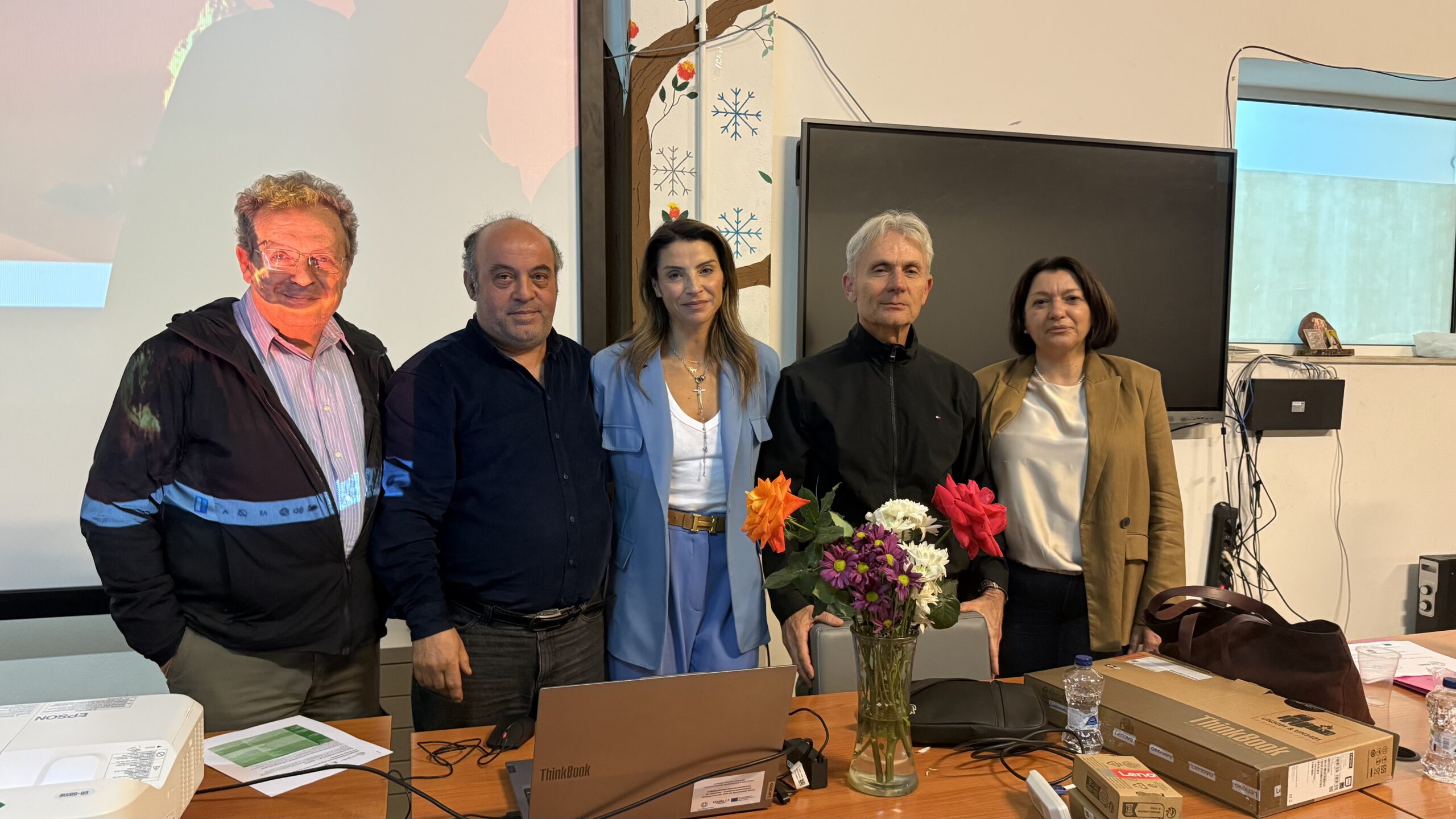
Presentation of the European project CSSBoost (Boosting Circular Systemic Solutions through Virtual Regional Circular Economy Space) at the Vocational High School of Platanias by the Regional Development Agency of Crete S.A.
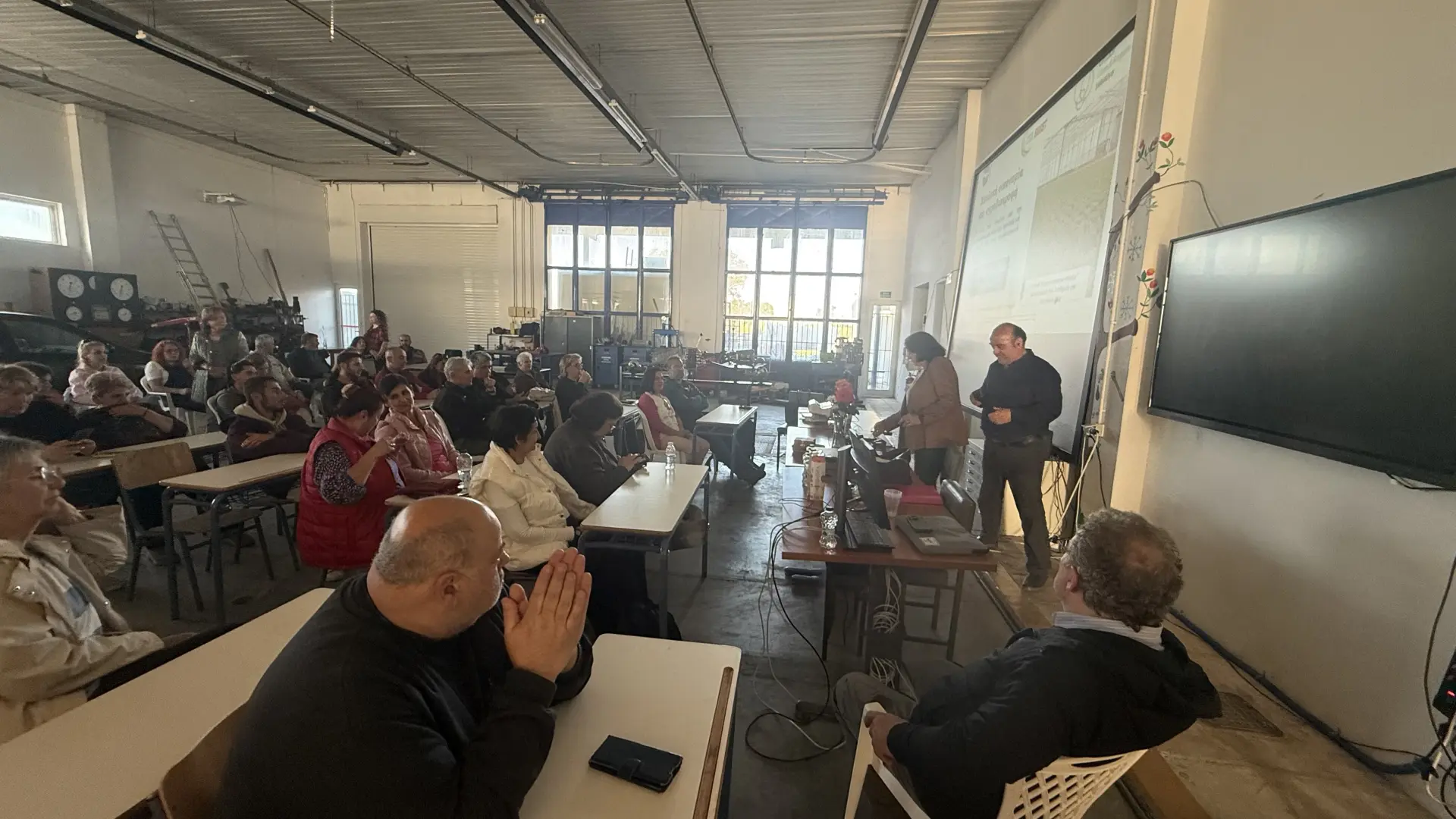
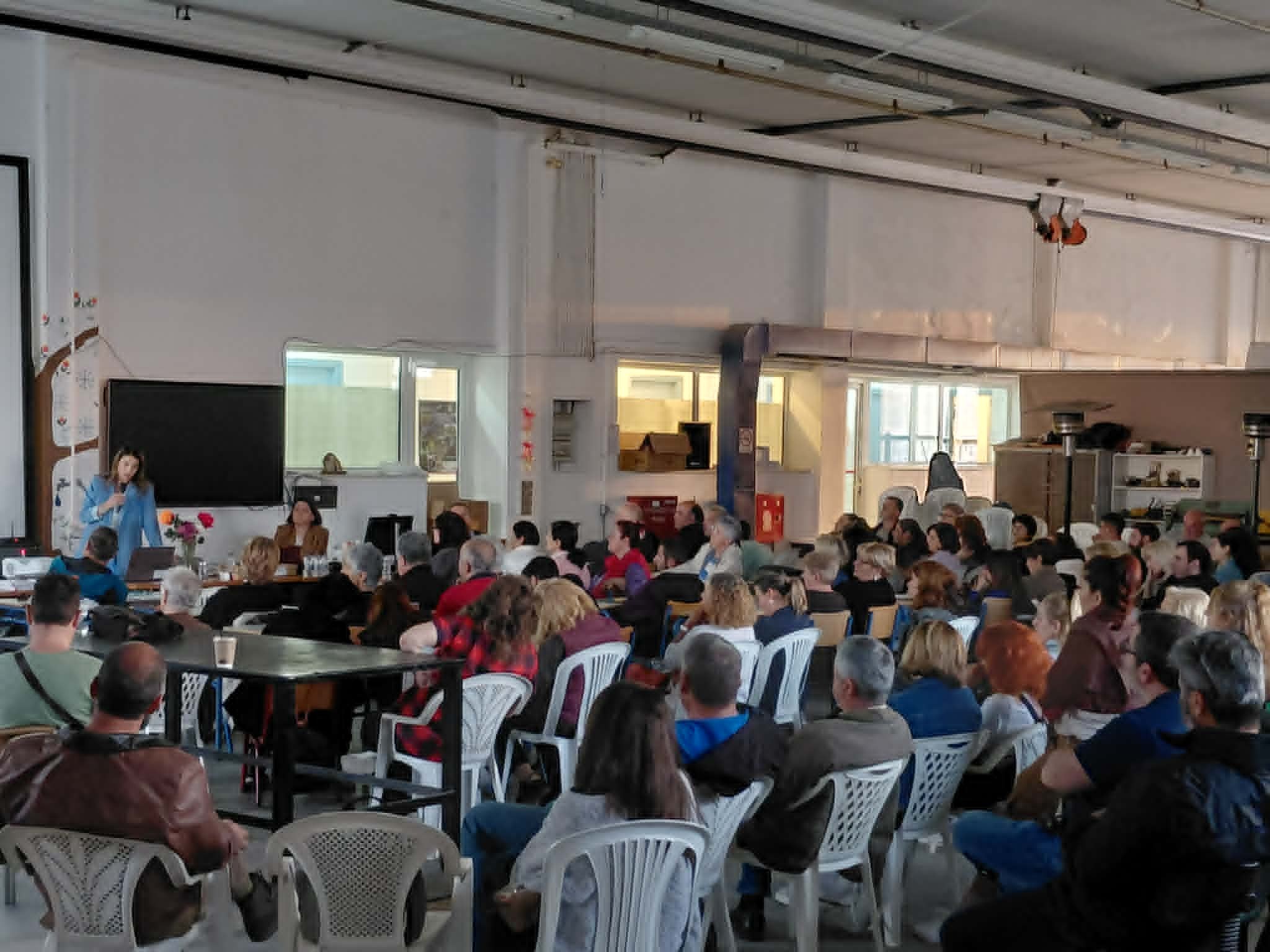
An information event for students at the Vocational High School of Platanias was successfully held on April 28 of 2026, by PANETAIK S.A., as part of the European project CSSBoost, aiming to raise awareness within the educational community on issues of circular economy and sustainable development.
During the event, the Director of PANETAIK S.A., Ms. Maria Petrantonaki, presented the core principles of the circular economy, highlighting the importance of shifting from the linear “take–make–dispose” model to one that preserves resource value and reduces waste. As she noted, the circular economy is a comprehensive system that prioritises product design, material reuse and resource efficiency — with recycling representing only one part of this broader approach.
Particular emphasis was placed on circular economy applications in the agri-food sector, such as the utilisation of agricultural and livestock residues for energy production, fertilisers and new high-value products, as well as the reduction of environmental footprint and production costs.
Ms. Katerina Litou, project management associate at PANETAIK S.A., then presented the CSSBoost project, which is implemented under the Horizon programme with the participation of 21 partners from 8 countries. The project aims to strengthen regional sustainability through the circular economy, promoting waste reduction and the transformation of waste into useful products such as fertilizers and food.
With the contribution of external project collaborator Mr. Ioannis Troulis, the pilot actions of the project at European level were also presented, with particular reference to Pilot 1 in Crete, which focuses on the agri-food sector and the valorisation of by-products through three main value chains:
-
utilisation of livestock residues (e.g. wool and hide)
-
utilisation of agricultural residues (legumes)
-
utilisation of food processing by-products (e.g. oats, carob)
These actions demonstrate in practice how the circular economy can contribute to the creation of new products, the reduction of waste and the strengthening of the local economy, while also fostering collaboration between producers, businesses and research institutions.
The event concluded with an open discussion with students, who had the opportunity to discover modern sustainable development practices and explore the professional prospects emerging from the green transition.
PANETAIK S.A. extends its warmest thanks to the Director of the Vocational High School of Platanias, Mr. Ioannis Darakis, for his hospitality and excellent cooperation, as well as for his continued support of initiatives that promote awareness, cultivate environmental consciousness and connect students with contemporary concepts and practices of sustainable development.
Going further, PANETAIK S.A. will continue to actively carry out information and educational activities in schools across Crete, contributing to the wider dissemination of the circular economy and the strengthening of environmental awareness among the younger generation.